
Ajitabh Pandey's Soul & Syntax

Exploring systems, souls, and stories – one post at a time

Author: Ajitabh

  • On The Origin of The Universe and Consciousness

    Man has always been a curious creature. This curiosity has led to various questions and which in turn have led to answers in the form of discoveries. One of the thought which has always occupied the human beings is the question of creation of this universe and what prompted it. One of the prominent theories in this regard is Big Bang Theory, which explains how the universe expanded from a high density and high temperature state. This theory of the origin of the universe gained popularity in the 20th century after the theoretical findings were backed by several experimental observations by Edwin Hubble, who defined Hubble’s Law.

    The scientists, philosophers and thinkers in the western world were largely unaware of several existing facts about the origin and creation of universe which were known to the Indian common man through various ancient scriptures. One of the earliest evidence about the origin of the universe is found in the ancient Indian book known as Rigveda. While in general, the Rigveda consists of hymns which mostly discuss cosmology, even while praising the deities. In particular, the 1st and 10th book of Rigveda (Prathan and Dasham Mandal) answers several questions about the origin of the universe and explains the Big Bang in cryptic form. The 16 verses of 90th Hymn in the 10th book of Rigveda is also known as Purusha Sukta (puruṣasūkta). According to the Veda’s “Purusha” is the person who runs “this universe”.

    A very simplified description of the supreme being and the creation of the universe has been explained in “White Paper on Religion of Saints And Radhasoami Faith”, published by Radhasoami Satsang Sabha, Dayalbagh, Agra, India.

    While all these verses and the current scientific theories explains the creation, none explains what prompted it. How did the creation started. God or the supreme being has been described as the one without name, form or demarcation. In my opinion any such entity can only be classified as “Pure Energy” or in other terms – “Consciousness”.

    Although the subject of consciousness has always been drawing attention, but this attention and the associated researches in the area have increased dramatically in the last decade and a half or so. It is highly difficult to explain consciousness, although it is something embedded in all our experiences. In the western perspective the focus is mostly on the outward and in the eastern tradition the focus is on the inwards. As a result of this the western approaches prefer scientific methods. In the eastern tradition, reason is often seen as secondary to the inner experience.

    Dayalbagh Educational Institute (Deemed University), Agra, India has been aggressively pursuing highest level of scientific research in the areas of Consciousness and Quantum Nano Computing via its Quantum-Nano Systems Centre And Centre for Consciousness Studies.

    I will continue sharing the researches done in the field of consciousness in the upcoming posts.
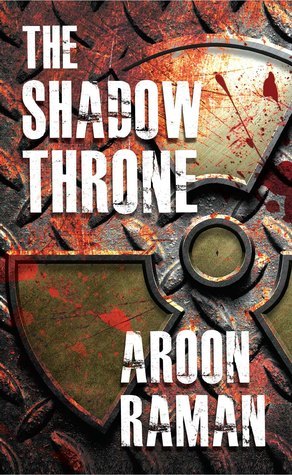
  • Book Review: The Shadow Throne by Aroon Raman

    When I first picked up The Shadow Throne by Aroon Raman, I wasn’t entirely sure what to expect. It’s the author’s debut novel, and I received a review copy curious to see what new voice might emerge in Indian thriller fiction. What I found was a fast-paced, intelligently written story that keeps you turning pages late into the night.

    The story opens with a chilling discovery, a mysterious murder at Delhi’s iconic Qutub Minar. The victim, strangely, is a Caucasian male with features reminiscent of Greek antiquity. Journalist Chandrashekhar is drawn into the case through his friend, Inspector Syed Ali Hassan. But things take an unexpected turn when the investigation is suddenly taken over by India’s intelligence agency, RAW.

    From there, the narrative expands into a geopolitical thriller that spans India, Pakistan, and Afghanistan, a shadowy world of espionage, double agents, and nuclear tension. What begins as a simple murder inquiry transforms into a race against time to prevent a subcontinental catastrophe.

    The Characters

    Aroon Raman introduces us to a diverse cast of characters:

    • Chandrashekhar, a seasoned freelance journalist driven by curiosity and conscience.
    • Inspector Syed Hassan, sharp and composed, but with secrets of his own.
    • Meenakshi Peerzada, a historian whose expertise unexpectedly becomes crucial.
    • Nalini Pant, Assistant Director of the Joint Intelligence Committee, adding a strong female presence in an otherwise male-dominated narrative.
    • Gull Mohammed, an ISI official whose motivations blur the lines between friend and foe.

    Each character feels well-etched and believable, and their interactions drive the story forward with energy and realism.

    Writing & Pacing

    Raman’s writing is refreshingly straightforward, there’s no unnecessary verbosity or dense backstory that often bogs down thrillers. Unlike authors such as Lee Child, he doesn’t linger too long on descriptive detail, and unlike Dan Brown, he doesn’t overload the reader with historical exposition. The result is a story that moves at a brisk, cinematic pace.

    The narrative flow remains smooth throughout, though I did feel that the ending wrapped up a little too quickly. A few more pages to dwell on the climax and aftermath might have added greater depth. That said, the book never loses its momentum, a hallmark of a good thriller.

    Final Thoughts

    For a debut novel, The Shadow Throne is an impressive effort. Aroon Raman manages to weave a compelling tale grounded in the political realities of the subcontinent, without resorting to melodrama or clichés.

    In a literary landscape where many new Indian authors tend to focus on mythology or romance, it’s refreshing to see someone venture confidently into the action-thriller genre. If you enjoy the works of Mukul Deva or are simply looking for a fast, intelligent read rooted in contemporary geopolitics, The Shadow Throne is definitely worth picking up.

  • Ansible Quirks – 2

    Today I tried to upgrade my ansible to 2.2 as I wanted to use the remote_src=yes feature from the unarchive module. My operating system on this machine is Linux Mint 17.3.

    I did –

    $ pip install --upgrade --user ansible

    and lo… I got the following error –

    ImportError: No module named packaging.version

    I next tried upgrading the pip itself and that also resulted in the same error. A bit of search on the internet did not help much as different ways worked for different people. So I decided to remove python-pip package and all that was installed along with it, reinstall pip and then try upgrading ansible. In short, following sequence of commands worked for me –

    
    $ rm -rf ~/.cache/pip/*
    $ python -m pip install -U --user pip
    $ sudo apt-get purge -y python-pip
    $ sudo apt-get autoremove
    $ sudo apt-get install python-dev
    $ python -m pip install --upgrade --user packaging
    $ python -m pip install --upgrade --user appdirs
    $ python -m pip install --upgrade --user ansible
    
  • Ansible Quirks – 1

    I started on the ansible learning path about 6 months or so back and have been writing my roles for deploying / configuring various systems I manage. Today while writing a template for sshd_config, I came across a point wherein the handler failed to restart the SSH service on the target server. Fortunately I was logged in as sudo on one of the terminals, and then I checked the config file generated and pushed by ansible. I found that the line

    PermitRootLogin {{ permit_root_login }}

    was translated to

    PermitRootLogin True

    . For a while I though that the variable I defined in

    defaults/main.yml

    was wrongly having a value of True instead of Yes, but I was wrong. Looking into some of the bugs filed in ansible I realised that this is the expected behaviour. The way to prevent strings like yes/no and true/false to be converted to True/False they have to be preceded with !!str in the variable definition. So the variable definition in my case would look like –

    permit_root_login: !!str Yes
  • OSX Screenshots tips

    Changing location to store screenshot

    The default place where screenshots are saved in OSX is the Desktop. For people (like me), who would like to keep their desktops nice and clean and a little organised, we can change the location where the screenshot are stored. This needs command line. Launch “Terminal” and type the following commands which should do the trick. I am moving my screenshot location to somewhere in Google Drive. Please note that the location which you are setting as the target for storing screenshots, must exist, and as you can see, I am creating it first.

    $ mkdir -p ~/Google\ Drive/Pictures/Screenshots
    $ defaults write com.apple.screencapture location ~/Google\ Drive/Pictures/Screenshots/ && killall SystemUIServer

    The “killall” command is used to restart the SystemUIServer so that the changes can be picked up by the system.

    Changing the Screenshot file type

    The default screenshot file type is PNG. However, you can change this to – jpg, tiff, pdf, gif by using the following command on the terminal.

    $ defaults write com.apple.screencapture type gif && killall SystemUIServer